Unified Technician Experience
Transforming the experience for Spectrum technicians across the nation.
Role
Product Designer
Prototyper
Prototyper
Length
2023-2024
2025-2026
2025-2026
Form
Mobile App
Tablet Web
Desktop Web
Tablet Web
Desktop Web
Collaborators
Product, Business, Research, Content Design, Accessibility, Development
Brief
In early 2023, our team at Charter was brought onto a new project called 'TechMobile'. As with many of the projects we have worked on before, we were tasked with re-imagining the field technician experience and streamlining their workflow.
I delivered polished designs spanning highly complex workflows, developed our design systems and direction, and created realistic prototypes for user experience testing. We created a custom design system based on mobile applications, establishing a library that had not been formalized at Charter at the time. By 2024, we deployed TechMobile to all of the technician workforce across 41 states.
In 2025, we re-visited the project to what was now called 'Unified Technician Experience' (UTE) to include managers, supervisors, and technicians that had previously not been included in the originally scope of the project. Called 'SupMobile', our goal now is to encompass the entirety of the technician branch by 2027.
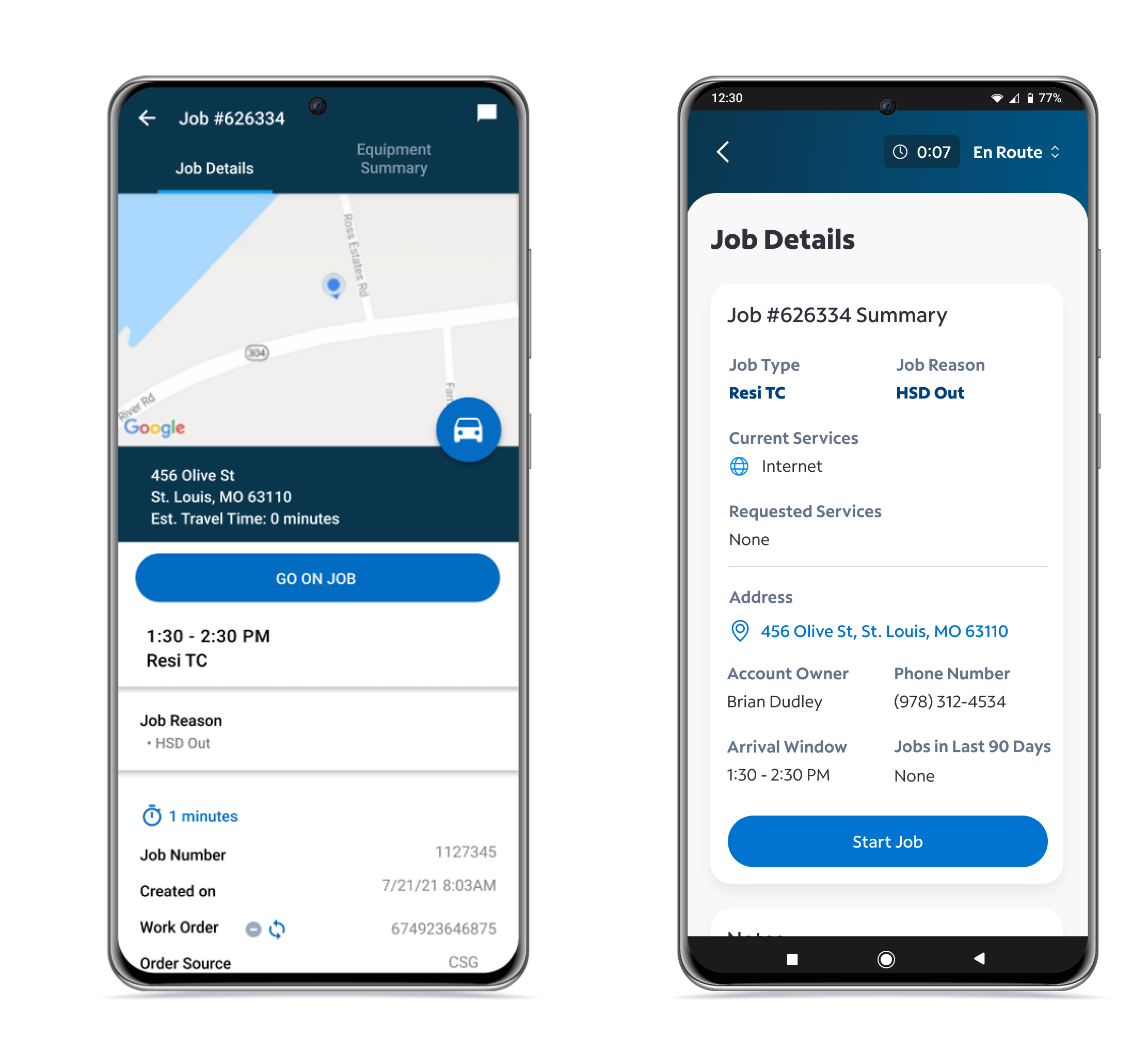
An example of a job for technician, before and after our redesign
Opportunity
No day is the same for technicians, who use a wide-range of equipment and tools to solve problems while on the job. Prior to our group, technicians had to use many different tools that varied in usability, visual design, and jargon. With an app, we were able to standardize our tools to our design system while also improving reliability as we had more control over our proprietary data.

We began this project with surveys and focus groups, gaining a basic understanding of their workflow. A large part of this project was based on a mobile-first philosophy as we transitioned our technicians to mobile devices. At the time, guidance for mobile design was not established at Charter, and so we began with a design system loosely inspired by Google Material Design, and adapted with our current design system, Kite.
There were interesting challenges this project presented due to the technician's complex workflow, such as equipment management, GPS location tracking, and customer interfacing. It was necessary to gain deep knowledge the technical limitations first, as opposed to designing from base knowledge and iteration as we have done before.
There were interesting challenges this project presented due to the technician's complex workflow, such as equipment management, GPS location tracking, and customer interfacing. It was necessary to gain deep knowledge the technical limitations first, as opposed to designing from base knowledge and iteration as we have done before.
Process
As we considered stakeholder input and early research, we determined that as a group, technicians had several distinct workflows. Technicians touched all these workflows at each part of their journey:
- Go/Start
- Activation
- Do/Additional
- Do/Critical
- Confirm/Close
- Admin/Enterprise
Each of these workflows went through a design sprint where we conducted research, created designs and iterated on them through user testing.
- Go/Start
- Activation
- Do/Additional
- Do/Critical
- Confirm/Close
- Admin/Enterprise
Each of these workflows went through a design sprint where we conducted research, created designs and iterated on them through user testing.


We were continuously learning and improving the product as we continued, later synthesizing and using our findings to inform us for the next phase of the project—UTE.
UTE included management and additionally technicians that had not originally been in the scope of our project. Now, we're covering more user groups that had even more technical considerations, such as construction and maintenance techs. We used the same sprint process, slowly incorporating more services and worfklows that we had not accounted for before.
UTE included management and additionally technicians that had not originally been in the scope of our project. Now, we're covering more user groups that had even more technical considerations, such as construction and maintenance techs. We used the same sprint process, slowly incorporating more services and worfklows that we had not accounted for before.

An example of our design system, covering padding & spacing.
Final Designs
Technician Dashboard
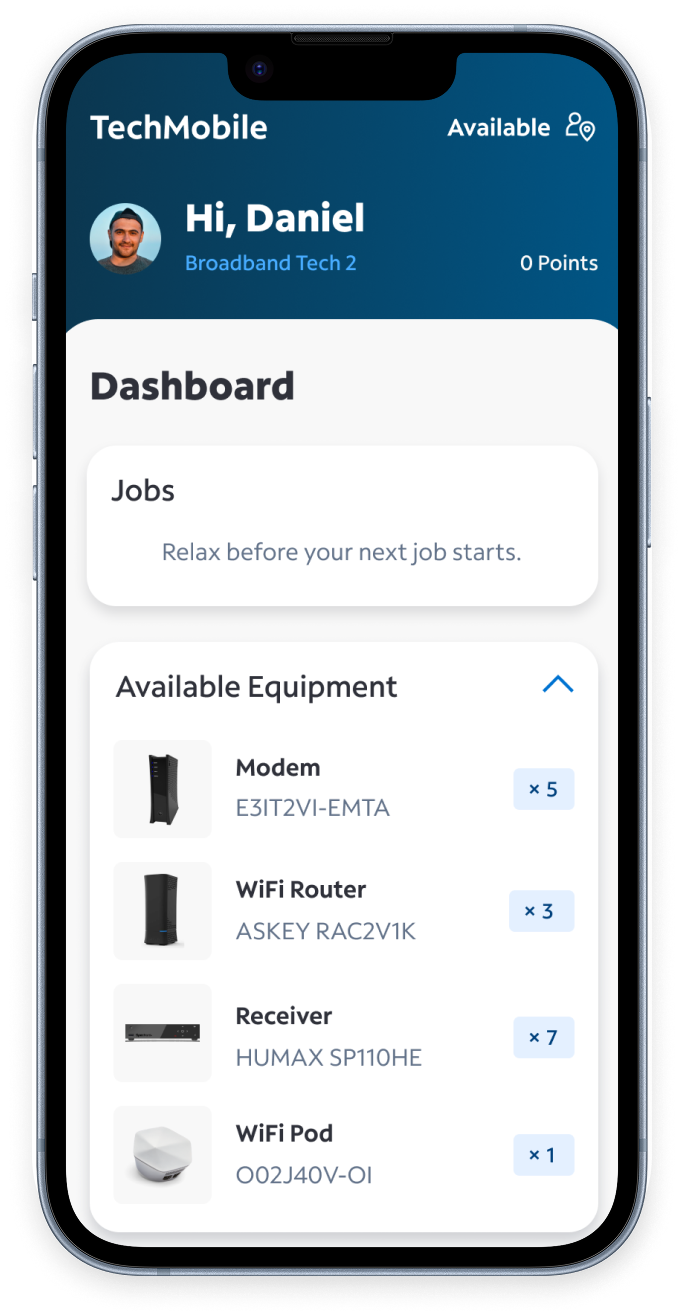
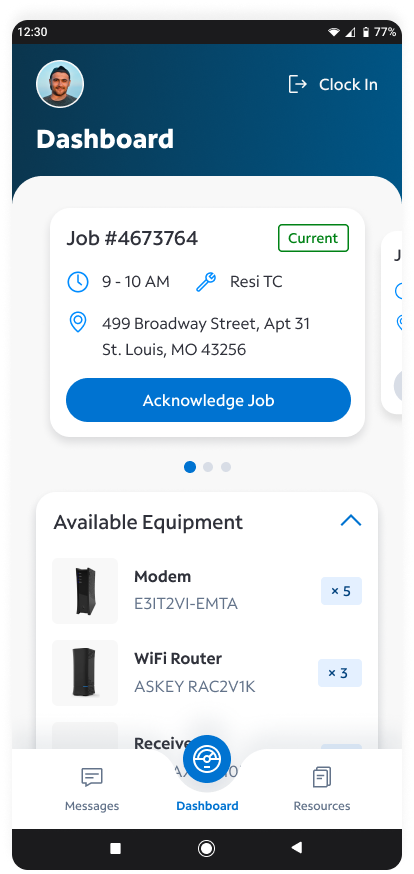
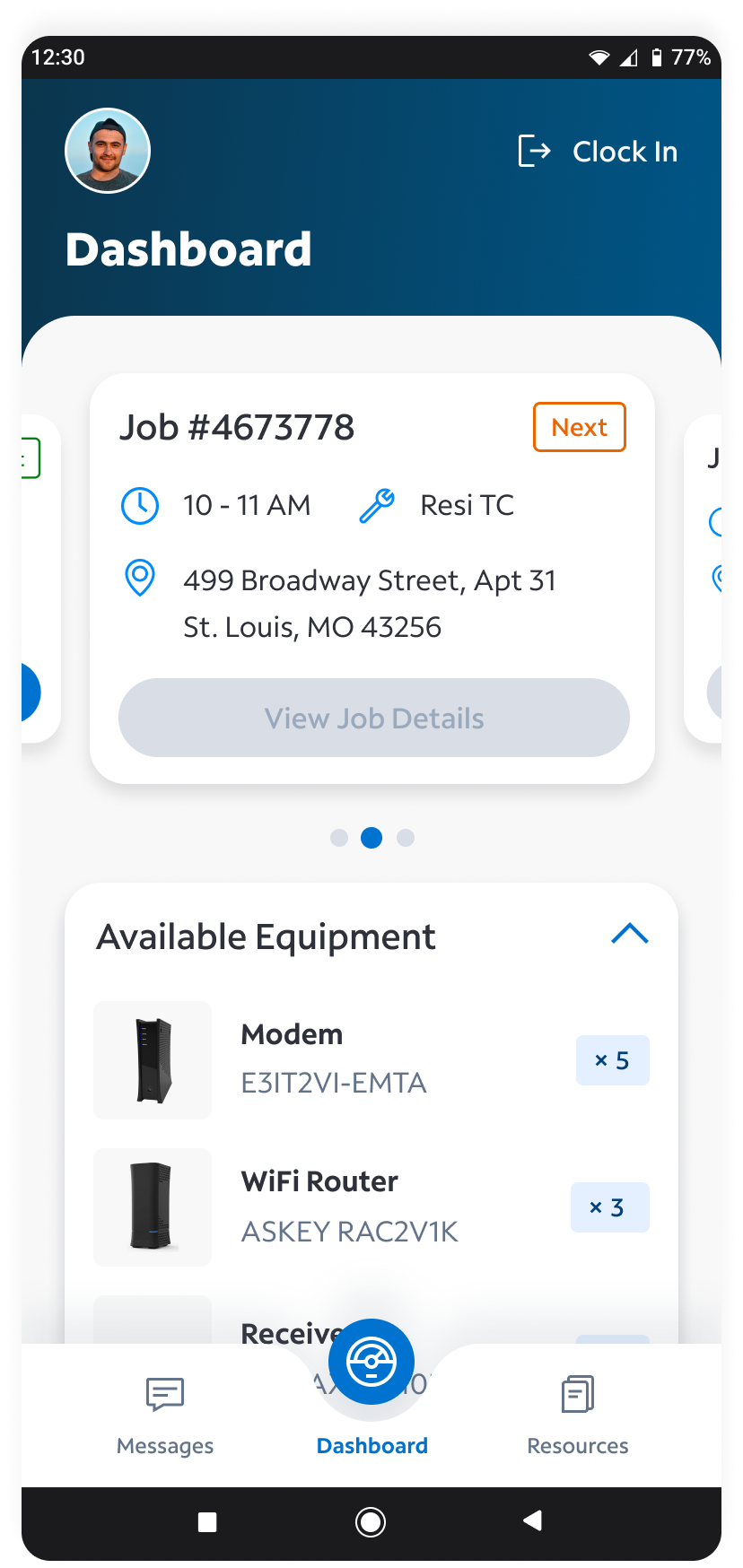
Our technicians preferred simple, yet information-dense designs. To accommodate this, when they've clocked in, they'll see their dashboard with a status, their jobs for the day, and the available equipment they have in their truck. Originally, we only had their first job shown, but after feedback, we implemented a way for them to see their jobs for the day, allowing them to anticipate and plan their route.

Install Equipment
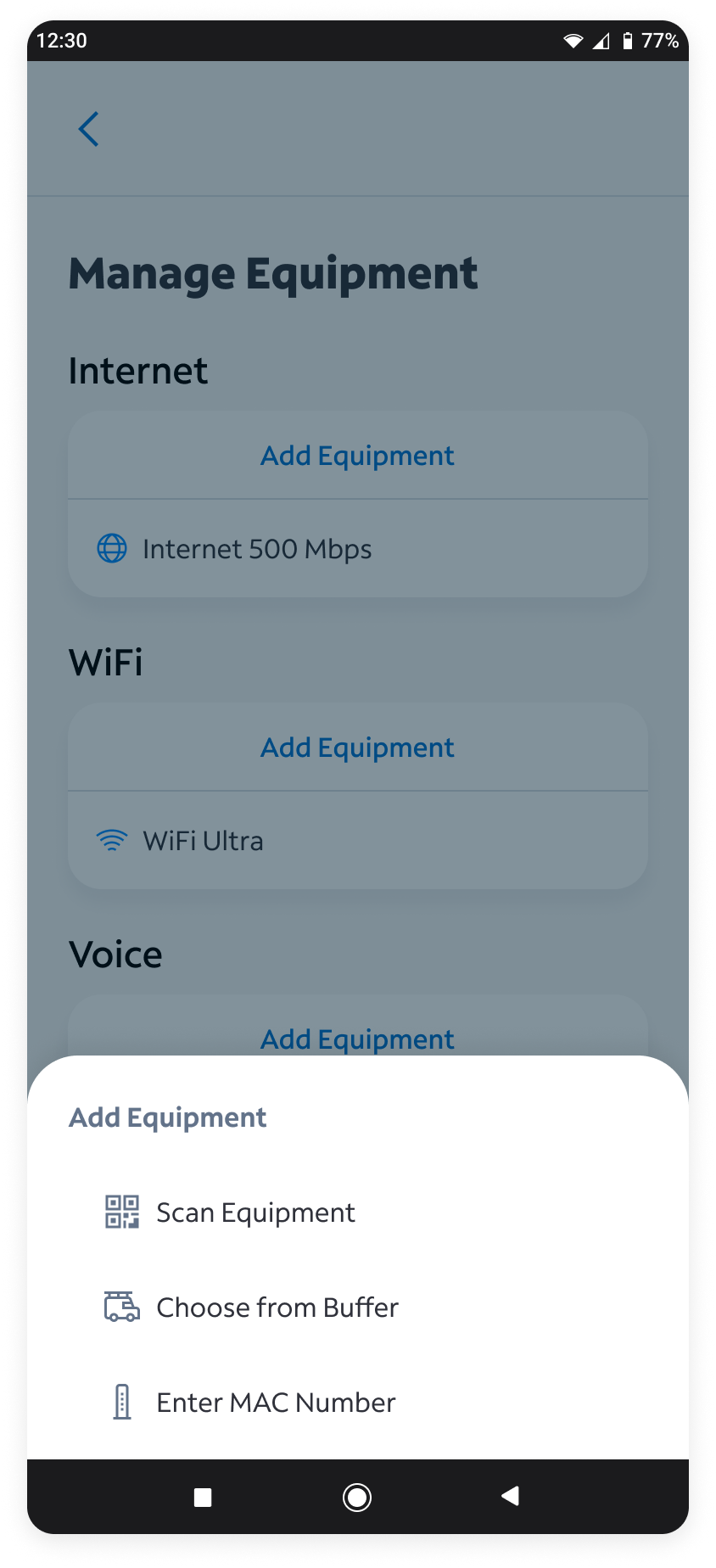
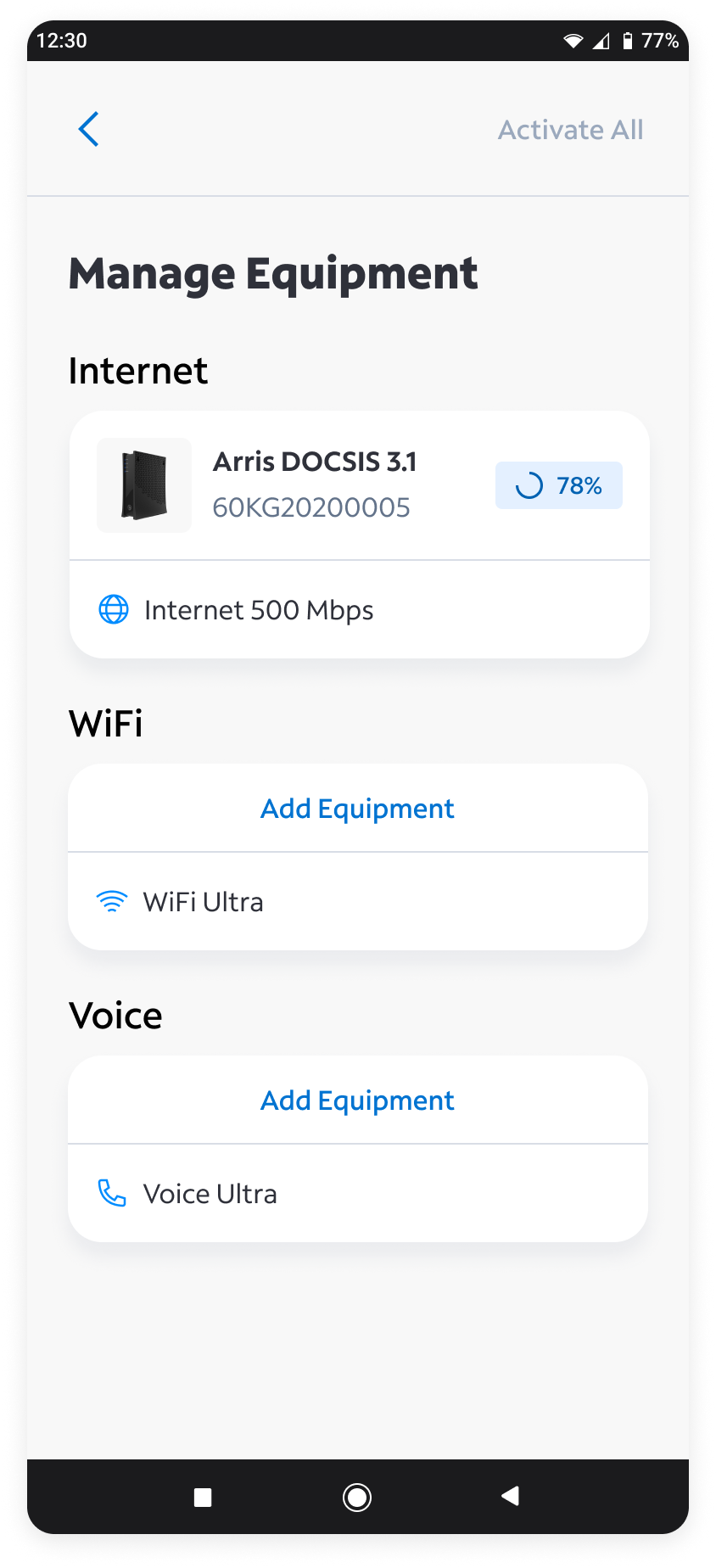
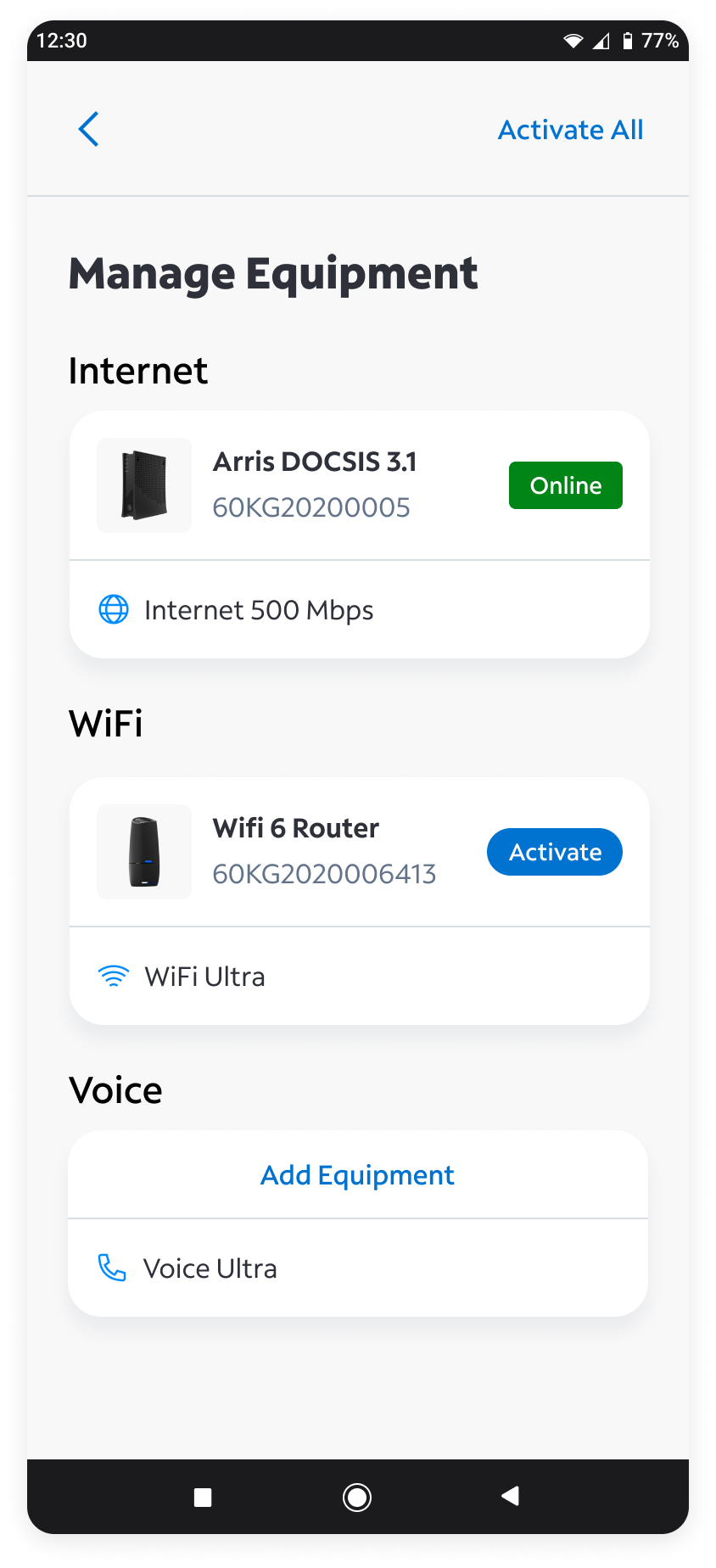
One of the processes that was important to technicians was the ability to add equipment, particularly with new installs. What was important here was to show the customer's plan, so that the technician can assign the correct equipment according to the services the customer signed up for. We showed them the activation process as well as when it was officially online, streamlining a process and giving them the information they need to complete their job.
Map & Technician Details
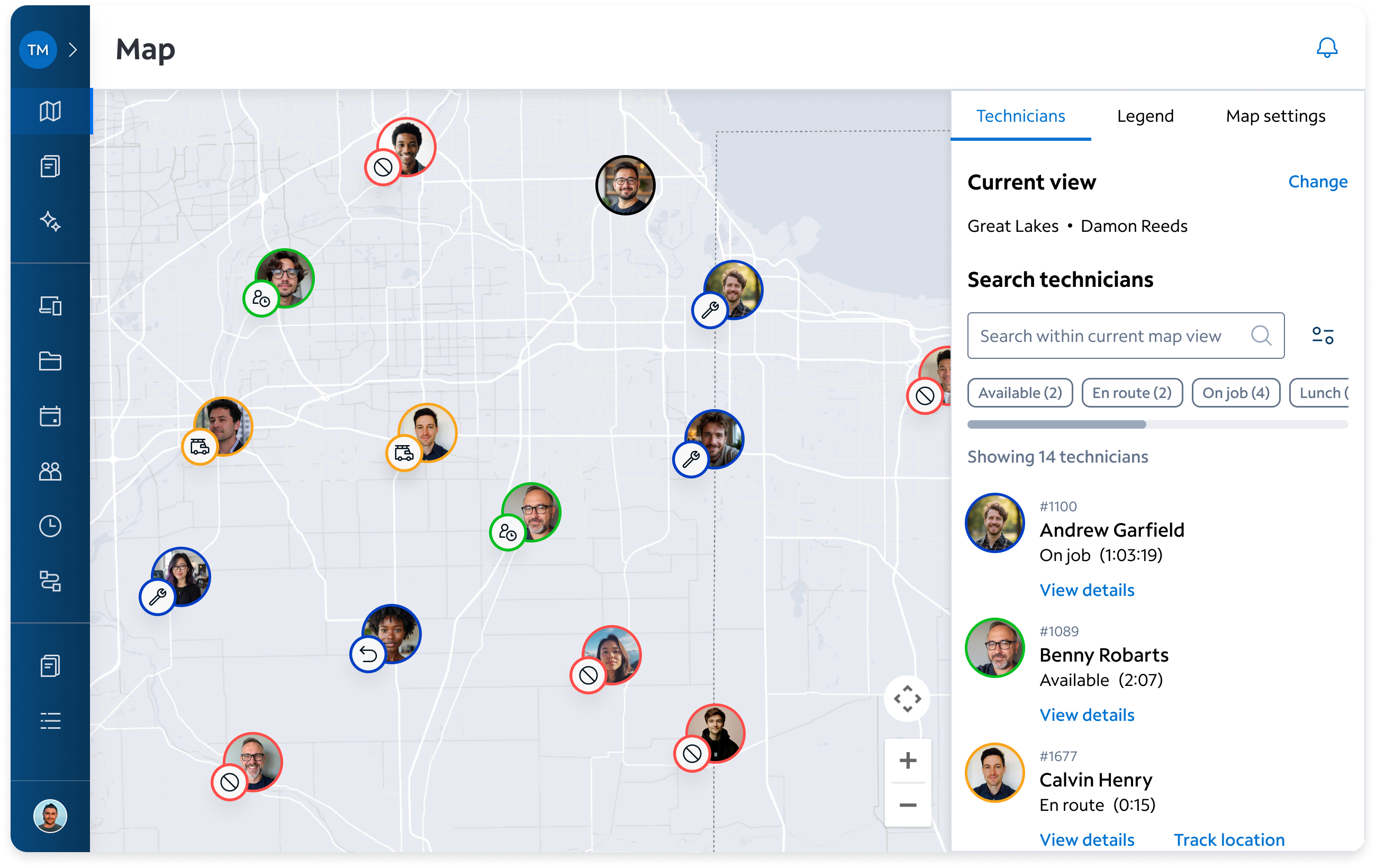
After technicians clock in, they're given their jobs for the day, which they will navigate to and complete. To assist the team, supervisors need to know their relative location and also what kind of job they are looking for. We gave a dashboard showing the supervisor's team, their relative locations, as well as the type of job they're doing at the current moment in time.
Conclusion
TechMobile released in 2024 to over 18,000 technicians across the country. After pilot and release, our team completed multiple follow-up studies to evaluate whether our redesign had been successful with our technicians. Fortunately, we were given opportunities to improve and iterate on our designs. We know from the originally discovery that scanning was better; only 1.6% of technicians had issues with scanning overall. Overall satisfaction with the product was above neutral, with a mean response of 3.1 out of 5.

An excerpt from the finding of TechMobile post-launch.
As we completed our designs, we were continuously uncovering and learning about the best practices for a mobile-first design. Of course designing for a smaller screen was a challenge, especially with the large amount of data that technicians had to process.
Another challenge for our team is that at the time, the company did not have a working mobile component library. Using our research and testing methods, we were able to create a custom mobile design system that was used as a basis for the company-wide mobile library. We used many sources and were particularly inspired by the Material Design library innovated at Google.
Overall, I would say that this product was a great success. We'll continue to monitor and iterate on our designs for our technicians moving forward. UTE is expected to launch by 2027 Q1, and I'm excited to see what comes next!